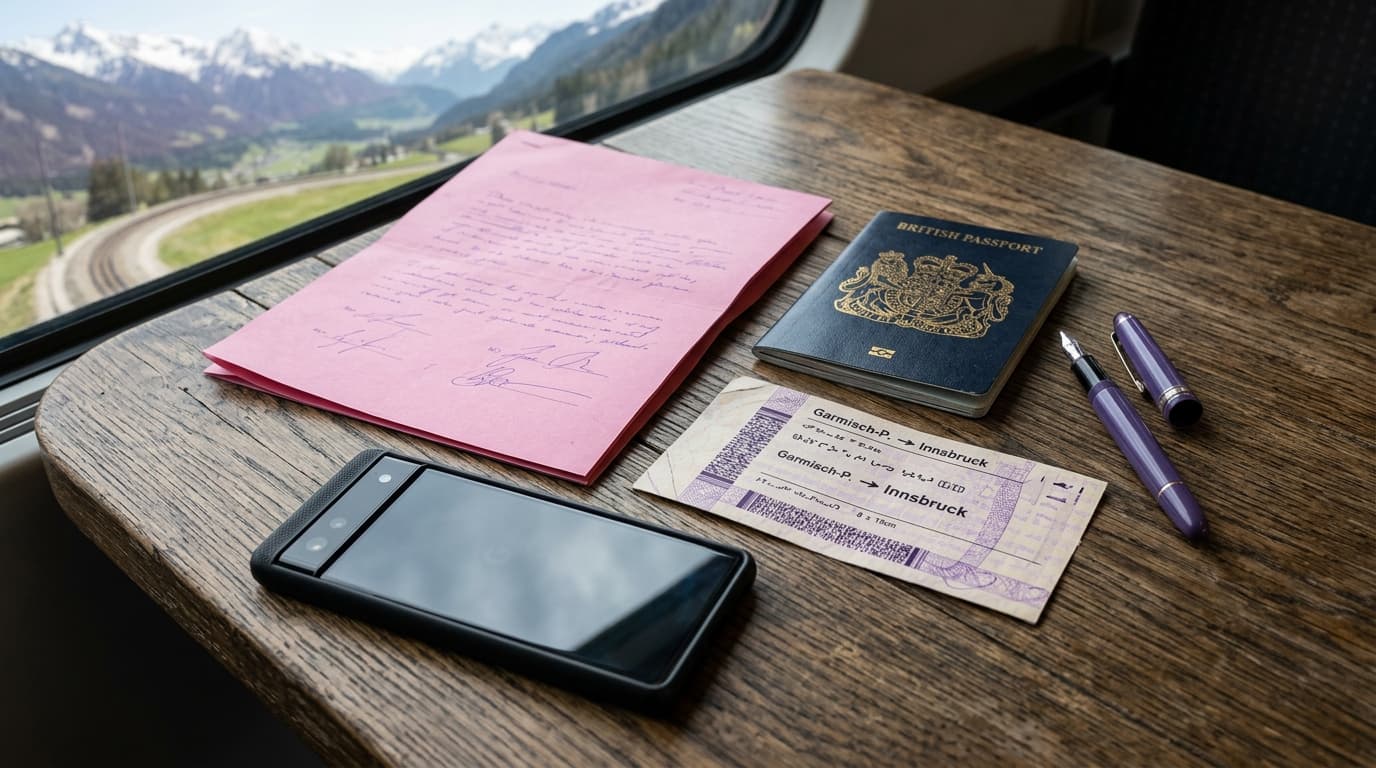
In Switzerland, your Belgian plan does not apply as it stands. None of the country's three big operators has put it in its European zone, and a week there costs between €14 and €52.43 depending on the contract. In the United Kingdom, Proximus and Telenet apply your plan just as they would in Namur. By commercial choice, not by obligation.
Switzerland, the UK, the Channel Islands: who charges what?
On 29 September 2026 I went through the public pages of Proximus, Orange Belgium and Telenet, destination by destination. The border that matters is not the European Union's. It is the list of countries each operator writes into its rates, and the three lists do not overlap.
| Destination | Proximus | Orange Belgium | Telenet |
|---|---|---|---|
| United Kingdom | EU zone, Belgian plan | not confirmed on the pages read | EU tariff zone, Belgian plan |
| Jersey, Guernsey | Zone A, €7.49 per day of use | not specified | outside the zone, charged |
| Isle of Man | Zone A, €7.49 per day of use | not specified | outside the zone, charged |
| Switzerland | Zone A, €7.49 a day, €59.92 at most per month | TOP50 country: Daily Travel, €4 a day for 1 GB | outside the zone, pass from €5 to €30 valid 30 days |
| Monaco | EU zone, Belgian plan | not specified | outside the zone, Swiss pass valid |
| Andorra | EU zone, Belgian plan | Best Destinations zone, charged | outside the zone, Swiss pass valid |
Three rows out of six give a different answer depending on the operator. Two friends going skiing in Andorra on the same unlimited plan, one with Proximus, the other with Telenet, will not get the same bill. The first pays nothing extra. The second has to order a pass before crossing the border, or pay the zone rate.
The UK, a commercial favour and not a right
EU Regulation 2022/612 guarantees "roam like at home" until 30 June 2032, in the Union, Norway, Iceland and Liechtenstein. The United Kingdom has been out of it since Brexit. The European Consumer Centre says it plainly: roaming charges apply there again, except with operators that choose not to charge them.
Proximus and Telenet make that choice. Proximus even lists Moldova and Ukraine in its EU zone, which the regulation does not cover either. But a commercial choice lives in a price list, and a price list gets changed. The day an operator removes the UK from its zone, that is a change to its tariff conditions, which in principle has to be notified to you; the mechanism and the time you have to react are set out in the article on mobile plan price increases.
For Orange Belgium, I did not find the sentence. Its help page on Europe names Switzerland and Andorra as exceptions, without ever mentioning the United Kingdom. Comparison sites say it is included. I will not write it until the operator writes it itself.
How much does a week in Switzerland cost at Proximus, Orange and Telenet?
The case: seven days there, data used every day, about 5 GB in total, a few calls to Belgium. Rates read on 29 September 2026 on the three operators' public pages, VAT included.
| Item | Proximus | Orange Belgium | Telenet |
|---|---|---|---|
| Out-of-zone mechanism | Daily Roaming Pass, automatic | Daily Travel, automatic in TOP50 countries | pass to order in the app |
| Pass contents | your Belgian plan: calls, texts, data | 1 GB of data per day | Roaming Plus: 5 GB, 60 minutes, 30 days |
| Cost of 7 days | €52.43 | €28 | €14 |
| Cost of 10 days, same month | €59.92 | €40 | €14 |
| Broader option | none | Travel Pass: €30, 7 GB, 120 minutes, 15 days | Roaming Ultra: €30, 12 GB, 180 minutes |
Telenet is the cheapest, on one condition: having ordered the pass before you pick up the first call. Proximus is the most expensive on paper, but it is the only one that carries your whole Belgian plan with you. If your plan includes unlimited calls, they stay unlimited in Geneva for €7.49 a day. At Orange, Daily Travel covers data only: calls go at the zone rate, which I do not cost here.
Beyond eight days in the same month, Proximus stops charging for the pass. The meter stops at €59.92.

The first-of-the-month trap at Proximus
The eight-pass cap runs per calendar month, from the 1st to the last day. Not per trip.
Ten days in Zermatt from 26 September to 5 October: five passes in September, €37.45, then five in October, €37.45. Total €74.90. The same ten days placed from 6 to 15 October cost €59.92. Same stay, same usage, €14.98 apart, purely because of the departure date.
What happens if you activate nothing?
At Proximus, nothing stays inactive: the pass starts on its own as soon as you use data, make or receive a call, or send a third text in the day. Proximus states that it cannot be deactivated. The first two texts sent to Belgium each day are not charged.
At Orange Belgium, the help page says Daily Travel activates automatically in TOP50 countries, Switzerland included, when you have no travel volume included. Travel Data Control cuts off data at €50 excluding VAT by default.
At Telenet, without a pass, you pay roaming rates per unit. The operator gives the example itself: thirty minutes of social media in Switzerland, 350 to 600 MB, can climb to €1,800. It blocks out-of-bundle data at €60.50 per billing period. The figure matches Proximus's €60 and Orange's €50 excluding VAT, since €50 excluding VAT makes €60.50 VAT included. The ECC Belgium points out that the operator must warn you in any case when the surcharge reaches €50.
These caps protect data. They let three things through:
- calls made and received, charged at the zone rate;
- texts beyond what the operator allows;
- maritime and satellite networks, on a ferry or a plane, charged in a separate zone.
Jersey, Monaco, Andorra: the boxes that surprise
Jersey, Guernsey and the Isle of Man are not the United Kingdom for a Belgian operator. At Proximus, these three islands are in Zone A, at the same rate as Switzerland; Telenet places them outside its EU tariff zone. The ferry from Saint-Malo to Jersey therefore changes your zone for the length of a crossing.
Monaco and Andorra do the opposite. Proximus counts them in its EU zone. Telenet does not, which is why its Swiss pass also covers those two countries.
Then there is the border. Near Geneva, Basel or Ticino, your phone can latch onto a Swiss mast from France or Italy, and the ECC Belgium cites exactly this case. Telenet advises setting a usage limit of €0 when you stay in a border area.
Mobile Vikings, BASE, DIGI: why I leave the boxes empty
The roaming zone belongs to the brand that bills you, not to the network that carries your calls. Mobile Vikings runs on the Proximus network, and its zone is not Proximus's for all that. On 29 September 2026 I could not read a complete page from BASE, Mobile Vikings or DIGI Belgium for Switzerland and the United Kingdom. The boxes stay "not published". Ask for the list of countries in writing before you leave.
Where are these rules written in your contract?
In the price and rate list, or the tariff information sheet, that the operator attaches to its general terms. That is what counts, not the plan's promotional page. Before a trip outside the Union, I would check four lines in it:
- the list of countries in your operator's EU zone, on the date you leave;
- the out-of-zone mechanism: automatic pass, pass to order, or per-unit rate;
- the data cut-off cap, and whether it includes the price of the pass;
- the counter used: calendar month or billing period.
To place your plan against the volume you actually use in Belgium, the article on how many GB per month for your usage gives the orders of magnitude. And if the bill after your trip does not match the recorded rates, the operator first, in writing, then the Telecommunications Ombudsman Service. The BIPT publishes the roaming framework for the Belgian market.
Sources
- Proximus, Daily Roaming Pass page: Zone A at €7.49 a day, at most 8 passes per calendar month, €59.92 at most, EU zone list, €60 data limit, consulted on 29 September 2026.
- Orange Belgium, "Our roaming options and passes" page and help pages "Are there roaming charges in Europe?" and "What are the charges abroad?": Daily Travel at €4 a day, Travel Pass at €30, Travel Data Control at €50 excluding VAT, consulted on 29 September 2026.
- Telenet, "Roaming in Zwitserland" page (passes at €5, €14 and €30, valid 30 days) and help page on roaming charges (EU tariff zone, block at €60.50), consulted on 29 September 2026.
- European Consumer Centre Belgium, mobile calls and surfing in Europe, consulted on 29 September 2026.
- Regulation (EU) 2022/612 on roaming on public mobile communications networks within the Union.
- Telecommunications Ombudsman Service; BIPT, international roaming.
Data & usage comparator
Compare all data & usage side by side.
Compare now →
Frequently asked questions

Fabrice D. a vendu des abonnements GSM pendant sept ans derrière le comptoir d’une boutique télécom à Namur, entre 2013 et 2020, puis a passé trois ans au service résiliations d’un opérateur virtuel belge — c’est-à-dire du côté où l’on lit les contrats à voix haute à des clients qui ne les avaient pas lus. Il sait donc exactement comment se construit un « GSM à 1 € » : un crédit de 24 mois posé à côté du forfait, avec son propre solde et ses propres conditions de sortie. Chaque mois, il relève les grilles tarifaires publiées par les opérateurs belges, note la date du relevé, et recalcule ce que chaque formule coûte au bout de deux ans, appareil compris. Ce qui l’agace dans son secteur : les prix d’appel affichés en gros pour douze mois, et l’écart — jamais imprimé nulle part — avec ce qui est facturé le treizième.