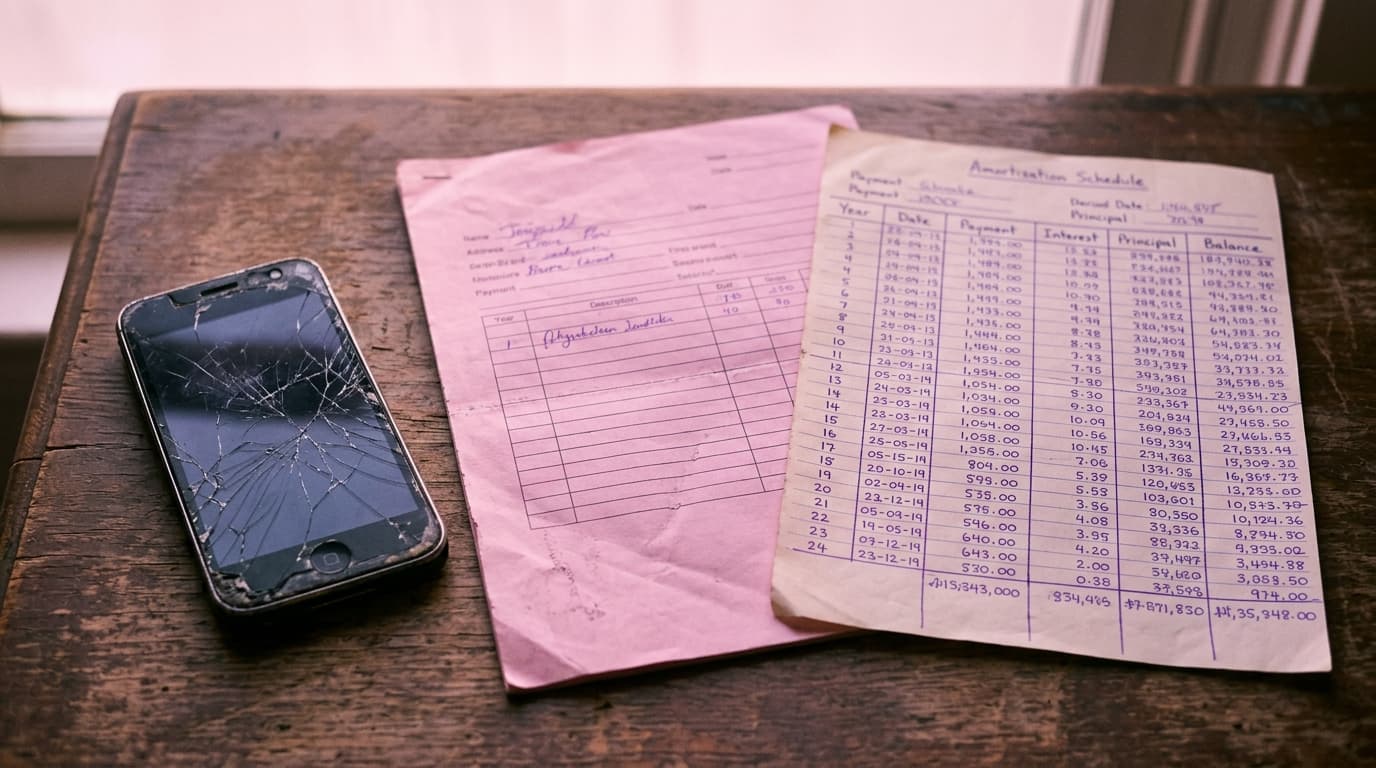
No, trading in your old phone does not lower what you still owe on the financed handset. Proximus pays with a voucher or a bank transfer, and so does Orange Belgium. The amortisation schedule does not move by a single cent. Recorded on 30 September 2026.
Where does trade-in money go at Proximus and Orange?
Into your bank account, or into a voucher. Never onto the « handset » line of the bill.
The Proximus trade-in page sets out two regimes. A device worth €20 or less earns a €20 Proximus voucher, handed over on the spot. Above that, CTDI, the logistics partner, assesses the device, sends a final proposal by e-mail and transfers the amount « in the days that follow ». The service is open to non-customers, five devices a month at most.
The Orange Belgium page follows the same logic under other names. In store, the value is paid as a shop voucher, with €20 on top. Online, CompaRecycle assesses the device once received and pays by bank transfer. Advertised ceiling: €500, depending on brand and model.
At Telenet and BASE, I found no public trade-in page on 30 September. The cells stay empty in the table, and I do not fill them in by guesswork.
| Channel | Who assesses | Form of payment | Stated timing | Touches the financed handset balance? |
|---|---|---|---|---|
| Proximus, value ≤ €20 | Proximus | €20 voucher | immediate | no |
| Proximus, value > €20 | CTDI | bank transfer | « in the days that follow » the final offer | no |
| Orange Belgium, in store | Orange | shop voucher, + €20 | immediate | no |
| Orange Belgium, online | CompaRecycle | bank transfer | after receipt and assessment | no |
| Manufacturer bonus (Samsung with Proximus, May 2025) | Samsung | bank transfer | seven weeks | no |
| Telenet, BASE | not published | not published | not published | not published |
The case that surfaced at Test-Achats says a lot: in December 2025 a customer left a Proximus shop with four €20 vouchers for four old phones, when she had expected a bank transfer. Both regimes exist, and it is the estimated value that decides which one applies.
Does a trade-in lower the financed handset balance?
No. And I have to correct a sentence I wrote on this very site.
In August, in the article on the €1 phone and its 24-month credit, I advised applying the trade-in to the financed principal. On the pages recorded on 30 September 2026, no Belgian operator offers that. The trade-in pays you; it repays nothing on your behalf.
Take the site's reference device: €599, a €1 deposit, €598 financed linearly over 24 months, or €24.92 a month. At month twelve, the amortisation schedule shows a €299 balance. Trade in your old phone for €150 that day: you receive €150, and you still owe €299. Leave the operator the following month, and €274.08 falls due in one go.
Three lines do not move when you trade in a device:
- the amortisation schedule balance, month by month;
- the handset instalment, billed separately from the plan;
- the date from which the plan can be cancelled without penalty, set by the six-month rule.
Can you put the trade-in transfer towards the balance, through early repayment? Perhaps. Neither Proximus nor Orange Belgium publishes the answer. Ask in writing, and keep the reply.
Six steps to trade in a phone without a nasty surprise
- Read the balance of the device you are replacing, in the amortisation schedule annexed to the contract. It is the one figure the trade-in will not change.
- Have the device estimated on two channels, for instance Proximus and Orange, and take a dated screenshot of each estimate, including the declared condition.
- Declare the condition without dressing it up: scratches, battery, casing, screen. The estimate is a ceiling; the final offer is calculated on the device received.
- Back up, then remove your Apple or Google accounts and reset the device. Proximus requires it before drop-off. Remove the SIM card and the memory card: under Samsung's 2025 terms, they are destroyed on receipt.
- Choose the bank transfer over the voucher if you are not certain to buy again from the same operator. A voucher ties you to a shop; a transfer, to nothing.
- Keep proof of drop-off, IMEI included, until the transfer arrives. Before sending, ask whether a revised final offer can be refused and the device returned, and at what cost: the pages read do not say.
Why does the estimate drop on arrival?
Because it commits nobody.
On the Proximus forum, a customer described on 27 August 2026 buying a Galaxy Z Fold 8 with a trade-in estimated at €505, that is €405 plus a €100 bonus. At assessment, the offer fell to €312. Gap: €193. The moderator's reply held one useful line: Samsung announces its trade-ins « up to » a maximum amount, and Proximus has no say over the manufacturer's assessment. A second customer, in the same thread, cites a Fold 6 estimated at €263 and taken back for €53.
I saw the same scene at the counter in Namur for seven years: the customer remembers the figure on the poster, the contract only promises the ceiling.
Is Orange's Return Guarantee worth its €5 a month?
It pays off mostly if you change phone at month twelve, not a day later.
Orange Belgium's Return Guarantee costs €5 a month. It guarantees 60% of the device's initial value for the first twelve months, 50% from month thirteen to month twenty-four, as a discount on a new smartphone bought at Orange. The page recorded on 30 September 2026 lists the iPhone 15 range as eligible models and reserves it for customers on an Orange mobile plan: on the site's price list recorded on 24 August 2026, Orange unlimited is €40 a month, post-promotion price not published. I apply the percentages to the €599 reference device, so the figures read alongside the balance.
| Trade-in at the end of month | Guaranteed value | Option paid | Net guarantee | Balance still owed on the handset |
|---|---|---|---|---|
| 6 | €359.40 | €30 | €329.40 | €448.50 |
| 12 | €359.40 | €60 | €299.40 | €299.00 |
| 13 | €299.50 | €65 | €234.50 | €274.08 |
| 18 | €299.50 | €90 | €209.50 | €149.50 |
| 24 | €299.50 | €120 | €179.50 | €0 |
At month twelve, the net guarantee covers the balance to within 40 cents. One month later, it loses €59.90 at a stroke, while the balance has only fallen by €24.92. If you take the option, put the month-twelve date in your diary. And bear in mind that the discount only applies at Orange: it brings you back to the same counter, for a new device and, in practice, a new amortisation schedule.
The trade-in bonus often comes from the manufacturer, not the operator
The « + €100 on trade-in » shown next to a new smartphone is often a manufacturer campaign. Under the terms of the Samsung campaign run with Proximus from 12 May to 1 June 2025, Samsung registered the claim, assessed the device and transferred the amount, within seven weeks. In a dispute, the manufacturer is therefore the one to write to, invoice and IMEI in hand.
Is selling it yourself more profitable?
Sometimes, and I am not going to put a figure on a second-hand price I have not recorded. A private sale pays you without an estimate ceiling, but takes time and a handover in person. The financed handset balance stays identical either way.
The rule that keeps the balance payable is federal: it applies the same way in Wallonia, Brussels and Flanders. The FPS Economy points out that a device received with the subscription stays due at its residual value, and the Telecommunications Ombudsman Service handles billing disputes with an operator free of charge.
Sources
- Proximus, « Échangez votre GSM » page, trade-in regimes, role of CTDI and drop-off conditions, consulted on 30 September 2026.
- Orange Belgium, « Reprise ancien GSM » page and « Return Guarantee » page, consulted on 30 September 2026.
- Samsung Belgium, specific terms of the trade-in campaign run with Proximus from 12 May to 1 June 2025.
- Proximus forum, thread « Offre de reprise mensongère », 27 August 2026; Test-Achats, public complaint about Proximus trade-in advertising, December 2025.
- FPS Economy, ConsumerConnect, cancelling a telecoms contract and residual value of the handset, consulted on 30 September 2026.
- The site's price list, recorded on 24 August 2026; amortisation schedule for a €599 device, €1 deposit, €598 financed linearly over 24 months. Post-promotion prices are not published and have not been estimated.
GSM & appareils comparator
Compare all gsm & appareils side by side.
Compare now →
Frequently asked questions

Fabrice D. a vendu des abonnements GSM pendant sept ans derrière le comptoir d’une boutique télécom à Namur, entre 2013 et 2020, puis a passé trois ans au service résiliations d’un opérateur virtuel belge — c’est-à-dire du côté où l’on lit les contrats à voix haute à des clients qui ne les avaient pas lus. Il sait donc exactement comment se construit un « GSM à 1 € » : un crédit de 24 mois posé à côté du forfait, avec son propre solde et ses propres conditions de sortie. Chaque mois, il relève les grilles tarifaires publiées par les opérateurs belges, note la date du relevé, et recalcule ce que chaque formule coûte au bout de deux ans, appareil compris. Ce qui l’agace dans son secteur : les prix d’appel affichés en gros pour douze mois, et l’écart — jamais imprimé nulle part — avec ce qui est facturé le treizième.